Total Pageviews

Friday, March 30, 2018

Various - "Babylon Berlin" OST, 3 x Vinyl, 2 x CD, LP, Album, Germany, 2018 (BMG)


Only a few times in my old life have I been affected by a film/show where I needed to get the soundtrack of that work right away.  "Performance" and "A Clockwork Orange" comes to mind that I raced to the record store to get those OST albums after seeing those films in a theater.  "Babylon Berlin" is the third soundtrack album, where I was compelled due to the excellence of the show, and how important the recording was to the images that came on my TV set.  "Babylon Berlin is a German TV show based on a series of detective novels by Volker Kutscher that takes place in the Weimar Republic.  The program is a mixture of noir and the Hardy Boys/Nancy Drew.  The soundtrack is mostly composed by one of the show's directors Tom Tykwer and composer Johnny Kilmek.  This three disk set if you play from side one to the last,  is two hours long.   Along with the Tykwer/Kilmek music, you also get the Bryan Ferry Orchestra, with Ferry on vocals on two cuts, the Moka Efti Orchestra, one song by Tim Fischer, and blues performer/guitarist (& wonderfully named) Guitar Crusher.

Like the production of the show, this soundtrack is a form of perfection as well.   When I first heard it, I thought it sounded like electronic music, but as far as I can tell, this is real instruments in a large ensemble, playing very complexed pieces.  It sounds like music composed/made in Germany in the late 1920s, but in actuality, the work is very layered and contemporary, but with one foot in the past, and the other very much in present 21st-century music.    The album by its packaging and theme one would think it will be nostalgic music, but the work is very 'now,' and is very much music based on the past, but with overtures to that's post-modern in practice.  The Bryan Ferry Orchestra is a perfect example of re-thinking one's work (Ferry's songs for solo and Roxy Music)  and placing it in another era.  For Ferry, I think it was another way of bringing life to his melodies or framing it in a new position where one listens to the work in a new way.  Ironically it's remembrances are from the past, but it's old music presented in a new manner.  Tykwer and Kilmek use the same method, but it's modernism that is the engine that makes this music so appealing.  The key track is "Zu Asche, Zu Staub" which is one of the great end-of-credit songs ever.   Also music (video) showpiece for "Babylon Berlin," with a cross-dressing erotic presence of Severija.  The show looks like it cost Millions (and it did) but also the soundtrack sounds as expensive to produce as well. 

Some soundtracks bring up the images from the film/show when you play it, and the music does that when you listen to "Babylon Berlin," but the other aspect is that this is music that can exist by itself.  A vibrant soundtrack to a historically significant (and sad) culture is placed on the grooves of this work by Ferry, Tykwer, and Kilmek. 


Tuesday, March 27, 2018

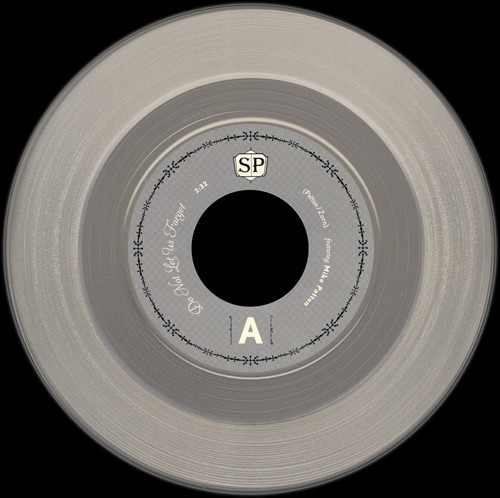
John Zorn - "The Song Project" Vinyl, Box Set of Six 45 rpm Singles, Colored Vinyl, Limited Edition (Tzadik)


Photographs cannot express or expose the beauty of this beautifully designed package from the world of John Zorn.  "The Song Project" is a box set of six 45 rpm colored vinyl singles, that comes with a booklet with photos as well as lyrics/introduction by one of the key figures in this project, Jesse Harris.   Zorn commissioned or asked Mike Patton, Harris, and Sofia Rei, to not only sing but also write lyrics to music written and recorded by Zorn and from his vast catalog of goodies.  I'm not clear if Zorn chose the songs, or if the singers went through the catalog to choose the music pieces to collaborate on, nevertheless an interesting and well-developed project.

Zorn strikes me as a community.  Which sounds egotistical, but the way it works is that Zorn carefully picks his artists to work with.  None of them are 'studio' musicians, many of them are composers/artists in their own right, but also are willing to collaborate with Zorn and whatever system he puts in place.  Zorn is the producer/composer/arranger.  Still, I feel each singer/lyricist and musician stamps their own identity to the project.  Zorn's aesthetic is not to close down the world, but to open it up to new possibilities and adventures.  It's impossible to pigeon-hole Zorn musically because he is all over the map, and that is very much part of his appeal/aesthetic.  For one to discover him, the listener will have to really put time into it, because his landscape is huge.  Which again, is part of the Zorn aesthetic. 

"The Song Project" is twelve songs, which could easily be one vinyl 12" album, but there is something special about getting up and down toward the turntable to turn the record over, or go to the next 45 rpm disc.  When I hear this box set, I'm hearing an album, not separate twelve songs.   I played all the vinyl in order, but if one chooses to (of course) they can mix it up - but for me, it's a consistent piece from the first single to the last.  There are three singers, and sometimes the other sings harmony or backup to the other.  Same musicians are on all the tracks, and Zorn is set as the conductor/arranger as well as the composer of the music.  The singers are responsible for the lyrics and in most cases sing their own work along with Zorn's music.  Sean Lennon wrote one of the lyrics, and that is sung by Patton and Rei.  There are traces of thrash/noise/rock, but the majority of the pieces are melodic and beautiful.  It's pop music made by adults and a great band of musicians.  

Oddly enough, this box set reminds me of my dad's (Wallace Berman) Radio Either series, which was also a box set of his verox collages.   One can look at them separately as pieces of work, but in actuality, it is one work in separate pieces.  For me, the singles, although separately issued in the box (with each one with a Zorn artwork cover) can be apart from the box set.  It's one work of art, and I think the format of putting them out as singles in a set that's in a box is very much of an object as well as how one approaches the material on this project.   Heung-Heung Chin did the design work, and the backing band is pretty much The Dreamers, who I wrote about before on this blog.  


Monday, March 26, 2018

Tony Hazzard - "Tony Hazzard Sings Tony Hazzard Vinyl, LP, Reissue, 1969/2016 (You Are The Cosmos)


I have favorite songs that I can't get enough of:  "Goodnight Sweet Josephine" and "Ha! Ha! Said the Clown."   Both were recorded by the Jimmy Page era of The Yardbirds, as well as Manfred Mann who actually had the hit with "Ha! Ha! Said the Clown."   My life goal is to get every recorded version of "Ha! Ha! Said the Clown." It's interesting to note that two blues related bands of that time recorded the most pop of the pop song possible at that time.  And I know there are Yardbirds fans who must that song and "Goodnight Sweet Josephine," but I love them to bits because they are provocative in the sense that its throw-a-way pop song, but brilliant at the same time.  The author of those two songs is Tony Hazzard, a songwriter from Liverpool.  

"Tony Hazzard Sings Tony Hazzard" is an interesting album, not only due that he wrote two perfect pop songs, but also he was one of the last songwriters whose existence is to write songs for other artists.  1969 is pretty late in the game for the pure pop songwriter when artists like Manfred Mann and Yardbirds were also writing their own material, and one presumes that the producer or record company made these bands take on Hazzard's professional material.  Also, The Yardbirds and Manfred Mann were slowly fading to of course change to Led Zeppelin and Manfred Mann Chapter Three.  Still, it was the last dying grasp that these bands recorded the Tony Hazzard songs. 

If one needs to compare Hazzard with another singer-songwriter it would have to be Graham Gouldman of 10cc fame, but also a very prominent commercial songwriter for a lot of beat bands during the early 60s, including The Yardbirds, The Hollies, and Herman's Hermits.  I don't know Hazzard's history, but I feel that he was the last 'echo' of that type of British songwriter such as Gouldman. 

Listening to Hazzard's record is odd, and it must have been odder to hear it when the album was originally released in 1969 when things got heavy, yet, this is an album of consistent pop songwriting techniques.  Clearly an album by a man who knows how to put a song together.  One thing that stands out in the recording is the 12-string acoustic guitar which is very strong in the mix.  There is psychedelic phrasing of the electric guitar - which may be a nod to the Jimmy Page touch, and in fact, maybe Page is on this album?   My obsession with British music is very much my interest, and Tony Hazzard fascinates me within that's context.   For those who love British pop, I do suggest checking this album out.  

Saturday, March 24, 2018

John Zorn's The Dreamers - "The Gentle Side" Vinyl, LP, Album, Limited Edition, Picture Disc, 2010 (Tzadik)

When I hear or read the two words put together John.  And then Zorn.  One is going on an adventure and never knows what turns or exits on that road will be.  You just hold on for dear life and go with the Zorn flow.  Zorn composed, conducted, and arranged "The Gentle Side" with his band The Dreamers, which by the way is a perfect name for a group that does this type of music.  Which is dreamy of course, but it has traces of jazz, exotica, and lounge, but not in a gimmicky fashion.  The Dreamers is profound music made by great musicians, which I need to credit: Marc Ribot on guitar, Jamie Salt on keyboards, Trever Dunn on bass, Joey Baron on drums, Cyro Baptista on percussion, and on vibraphone Kenny Wolleson.

Ribot's work on "The Gentle Side" is a combination of surf, cinematic noir, and maximum taste in adding his sound to the mixture, which is always a soft groove.  All the musicians play as if they are one brain but with many arms and hands.   This I think is due to Zorn's approach to these songs on the album.  They are written compositions, and I don't know the working method to "The Gentle Side" is,  but it's very sophisticated lounge music that is true to its tradition. There is an edge that lurks underneath the surface.  A tension that swims in the under-currents of the songs and arrangements.  That's the beauty of this album.  Also, Zorn writes strong melodies.  The Dreamers take that aspect and expand on it as jazz musicians focusing on an idea or concept.   They never make a false move, and of course, there is great respect for the composer and his work.   Also noted is the great graphic design from Heung-Heung Chin.  It's lovely to watch this picture disc go round and round on one's turntable.

Andy Newman -"Rainbow" Vinyl, LP, Album, 1972 (Track Records)


Eccentricity is not appreciated enough in the mainstream pop music world.   Andy Newman was in the band Thunderclap Newman, which included him (of course), Speedy Keen (the chief songwriter) and teenage guitarist Jimmy McCulloch.   An odd trio of music makers, but Newman added surprised touches to Keen's compositions by adding his turn of the century style of boogie-woogie piano, and the punk instrument that is a Kazoo.   What made Thunderclap Newman so wonderful was the Newman touch and he took the songs to another level. Especially with the song 'Accidents" which has an incredible middle part that is pure Andy Newman solo artist. 

After the band split up, Newman made this very strange solo album "Rainbow."  It's all him playing the instruments and mostly instrumentals.  It's like all the weird parts of Thunderclap Newman, leaving out the singing and the pop side of things.  "Rainbow" is very much music rooted in the 1920s, there is a touch of the British Music Hall, but it's more of a scaled down version of big band jazz of the early 20th century.  The most dominant instruments are Newman's piano and kazoo playing.   He also plays various saxes as well, and my only complaint is that I wished to hear a full-blown arrangement with him playing all the horns, piano, etc.  And he does in spots, but a lot of the songs/arrangements are just for piano and kazoo.  

I lost track of him as a musician after Thunderclap Newman, and only recently discovered this solo album by Andy.   I regret that he didn't make more music or albums in the later years. It seems he put together another version of Thunderclap Newman to play the old songs, but as far as I know, no new music.  Still, "Rainbow" and the first and only Thunderclap Newman album "Hollywood Dream" are amazing.  Also do note that the b-side to Thunderclap Newman's only hit song in the U.S. "Something in the Air" is "Wilhemina" which is a superb Andy Newman song.  A classic.  Look out for it!  

Friday, March 23, 2018

Keiichi Ohta and Koji Ueno - "Jingai Daimakyo" Vinyl, LP, Album, Japan, 1983 (Yen)


Japan has a dark history, and the pre-war years of Tokyo was an exciting time of politics, but also a great period for then-contemporary literature, visual art, and various movements that were taking place.  Some inspired by the West, but still rooted in Japanese aesthetic.  In the 1980s various members of the underground Japanese pop world were obsessed with the 1920s/1930s such as the band Guernica, Koji Ueno, and the great vocalist Jun Togawa.  "Jingai Daimakyo" (the savage terrifying places) is a separate solo album by Ueno along with lyricist/visual artist Keiichi Ohta, based on the writings of mystery/horror writer Oguri Mushitaro (1901-1946). 

"Jingai Daimakyo" is very much a Guernica album but without the vocal talents of Togawa.  Each song has a different vocalist, and the most noted singer on this album is Haroumi Hosono, who at the time was a member of the Yellow Magic Orchestra (YMO) and he and fellow YMO member Yukihiro Takahashi ran the Yen record label.    Ohta, the lyricist as well as producer for this album is a noted artist/illustrator in Japan, and his work captures the sexuality/violence of the pre-war mentality.  Retro to the extreme, both Ueno and Ohta make music and images that are unique, and could only come from Japanese pop culture.  

The album is a small masterpiece because it captures a passionate part of history, and convey it to an aural assault of the senses.   Ueno's music is very much in the manner of 20th-century music history. In a fashion, this album reminds me of Van Dyke Parks' "Song Cycle" album, if one needs a reference to their aesthetic.   Not an easy album to find, especially outside of Japan. Still, one can locate the album on YouTube. Happy hunting! 


Thursday, March 22, 2018

Cream - "Fresh Cream" Vinyl, LP, Album, Reissue, 1966/2008 (Vinyl Lovers)


The greatest contribution Eric Clapton made to Cream, is not his guitar work, but vocally backing up the magnificent Jack Bruce.  Clapton's voice comes almost as an inner-thought to Bruce's narration or words.   in an odd way, Cream was a band that had two separate identities or approaches.  One is live on stage, and number 2, is the studio.  Ginger Baker, Bruce, and Clapton made magnificent music in the studio, their live performances is another matter altogether.  There is confusion instead of clarity in Cream.  For one they are for sure a blues-based band, but what makes their work interesting is the experimental side or their occasional approach to pop.  Their blues material is OK, but it's the pop side that I find interesting and that's mostly due to Bruce's (and Pete Brown the lyricist) approach to the song.   "Fresh Cream" is their first album, which has many charms, but for me, it's all Jack Bruce. 

The other star in the trio is Ginger Baker.  He plays drums with character and personality.  In no fashion is his work session-like.   Heavy on the cymbals, but with a jazz feeling, him and Bruce are unique rhythm section that sounds different, but in theory close to the Entwistle and Moon combo in The Who.   The outstanding song here is Bruce's "Dreaming" which is a beautiful ballad, with Clapton's voice following Bruce, like chasing a faint dream.  It's the song that made me re-buy this album.  That song, plus "The Coffee Song," "I Feel Free," and the magnificent "Wrapping Paper" are almost forgotten works of songwriting craft and vision. 

Cream is important, I think due to their approach of being a trio power band, but again, it's the soft moments that I think are their strength.  As Cream went on (not that long, I think the band lasted just a bit over two years), it's Bruce being the multi-instrumentalist, with Clapton backing him in a conservative manner musically speaking.   Also, another trio was making the rounds around the same time as Cream, which was The Jimi Hendrix Experience, where I think making comparisons between the guitarists, made Clapton re-think his career.   Still, Clapton served Cream well.  Jack Bruce/Ginger Baker was the entrance and Clapton closed doors.