Total Pageviews

Wednesday, July 19, 2017

Magazine - "After The Fact" CD, Album, Compilation, 1989 (I.R.S. Records)


For me, the band Magazine is or was the foundation where a lot of post-punk bands based their aesthetic on - especially Radiohead and The Bad Seeds.   It's very much an orchestrated sound surrounding the vocalist and lyricist Howard Devoto.   Therefore a real band where each member of the group contributes to the overall sound that embraces Devoto.  Think of it as a heist job where criminals get together to rob a horse betting track or a bank.  Each member of the gang is crucial in making sure everything works out together.   In turn, I think Magazine were influenced by Roxy Music.  

"After the Fact" is a compilation album of their 45 rpm singles and b-sides.  Magazine issued singles that were separated from the albums.  Not sound wise difference, but often the single wasn't on the 'official' album.  Perhaps they were the last traces of the 60s mentality of the importance of the 45 rpm single, and that it was a different medium.   There is not a bad cut on this album.  Magazine were a fantastic 'singles' band.  

Devoto singing "Goldfinger" is the perfect fit.  At one time, the group wanted to be produced by John Barry, which makes perfect sense with respect to their aesthetic.  Not in a campy way, because Magazine doesn't do 'camp.'   More to do with the John Barry sound of mixing strings with the voice. It's a shame that they never had the opportunity to write and produce a James Bond theme song. Nevertheless in the world of Magazine that are so many treasures to explore.  Also if the song is on the album, usually it's a different recording.  For example, "Shot by Both Sides" is an entirely different recording.  I believe the single, their first recording, didn't have any keyboards on it.   So if you do buy this album, you really don't have to worry about getting repeated tracks, except for their late single "About the Weather" and "A Song Under the Floorboards." 

"A Song Under the Floorboards," "Upside Down," and "Touch and Go" are Magazine classics.   The classic lineup of Barry Adamson, John Doyle, Dave Formula, and guitarist John McGeoch couldn't be better.   "After The Fact" came out after the band broke up, and it was a series of moments that became perfection, practiced by a gang of visionaries. 


Tuesday, July 18, 2017

Nilsson - "Aerial Pandemonium Ballet" Vinyl, LP, Album, 1971 (RCA)


I have a "best of" on CD and this one vinyl album by Harry Nilsson.  My understanding that "Aerial Pandemonium Ballet" is an odd one by Harry.   With the success of "The Point" RCA wanted to re-release Nilsson's first two out-of-print albums: "Pandemonium Shadow Show" and "Aerial Ballet."  Nilsson thought else wise and decided to make a new album from songs from the early albums, but remixed and re-recorded in some cases.  So depends on how one looks at the original recordings and this updated collection.  I, on the other hand, can't make the comparison due that I only have this album, and never heard the first two albums by Harry.  

"Aerial Pandemonium Ballet" is an album full of promise but touches on heartache.  Nilsson knows how to walk the balance between observational narratives ("Good Old Desk") and painful past ("1941").   An incredible vocalist, while obviously a student/fan of The Beatles as well as an understanding of the Brill Building aesthetic; he's the bridge between those two worlds.  For me, I never followed his career after this album.   I think he evolved or moved on, and I pretty much stayed with this one album. 


Saturday, July 15, 2017

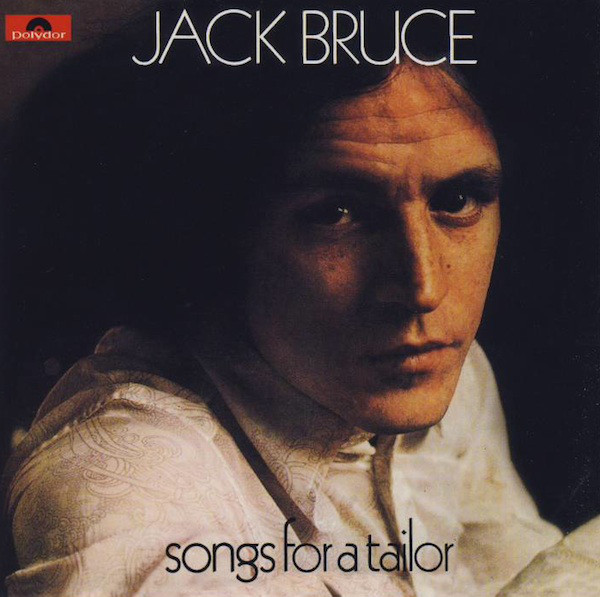
Jack Bruce - Songs for a Tailor" CD, Album, Reissue, 2003/1969 (Polydor)


Jack Bruce was my guy in Cream.  I never was a fan of Eric Clapton, even though as a teenager I fell for his "importance" due to my friends at the time.   Except for "Badge" and a few others, the Jack-Cream songs were it.  And as much as possible I tried to stay as far away from the Cream live recordings.  I hated them in 1968, and I still dislike them.  But Jack Bruce/Cream/Peter Brown part of Cream, almost perfect.   In 1969, I did buy the Jack Bruce song because I knew it had to be good.  And good it is, if not fantastic.  

Since Bruce is a bass player, the bass is way up high or part of the overall mix on this album, and I love that.  His playing embraces and holds the song as a frame, with the melody and the other stuff inside the frame.  An underrated songwriter, and the fact that he had an open mind with respect to different types of music - such as jazz and the experimental side of pop music making or unique collaborations.  Clapton never went there, and Ginger Baker, God bless him, also was an adventurer at heart.  Another artist that comes to mind is Mick Karn, who was the bass player for the band Japan. There is that jazzy, strong bass holding the material together.  Karn's first solo album is emotionally direct as well as his bass playing.  Perhaps a strange connection, but listening to the Bruce album, it brings memories of Karn as well. 

"Songs for a Tailor" is for me the next step after the studio side of Cream's "Wheels of Fire."  "Rope Ladder to the Moon" could have been part of the "Wheels of Fire" album.  It's cello/bass, and dynamic acoustic guitar playing (by Bruce) is dreamy but rhythmic.  One has to give notice to the poetic lyrics by Peter Brown, and it's interesting that Bruce worked with such a literary bent, then say "I love you do you love me" rhyme/sentiment.   Still, there is an emotional pull in their songs.  Brown's lyrics are baroque and visual, and Bruce treats them not only as a personal statement but also 'performs' these songs though his singing.   I can imagine Bruce being in a musical. 

The beauty of "Songs for a Tailor" is Bruce expanding his canvas or landscape and filling it with a strong essence of wonderful songs, but again, his voice and bass playing is essential here.  It's obvious to me that he needed to get out of the Cream framework because I think it became too confining.   It's a great album to revisit time-to-time.  "Songs For a Tailor" still sounds strong and mighty. 

"Henri Salvador Alias Henry Cording and his Original Rock and Roll Boys" CD, Album, France, 2002/1956 (Philips)


The first French Rock n' Roll and it may have been a joke, but alas, it does rock.  Henri Salvador is a jewel in the French music world.  Entertainer, incredible jazz guitarist, songwriter, and humorist.  Also a great pal of Boris Vian, who signed him to Philips, in his later career as an A&R man for a record label, after a career in writing, translating, singing, songwriting, and of course, engineer.  Vian and Salvador wrote what sounds like a parody of rock, played by French jazz musicians.  This originally 10" release (Oh, how I wish I own that version) in 1956, saw the presence of rock entering the French market place.  My guess is that Vian, a total Jazz-head, probably liked the Black American elements of rock n' roll and not that crazy about the commercial push of that genre.  But that's just an educated guess on my part.  Half the album is Salvador/Vian, and the other is Vian/Michel Legrand songs.  Big band, honking horns, excellent cutting electric guitar, and Salvador singing the absurd lyrics by Vian.   Superb music. 


Friday, July 14, 2017

Billy Fury - "The World of Billy Fury" Vinyl, LP, Album, 1971 (Decca)


This once good-looking young man was the best to come out of the United Kingdom/Pre Beatles.  A Liverpool citizen who can rock like Elvis, but made more hits by singing perfect pop songs.  Billy Fury (incredible name) was the real deal.   A lot of British rock/pop singers before the Fab Four came on the scene, were manufactured by various managers.  Fury was part of that school, yet he also wrote his own songs as well.  I can never understand why Fury wasn't a star in the States, except perhaps the presence of Elvis kept others out of the U.S. market.   

Decca throughout the years has put out "The World Of..." series.  Mostly cheap or budget best hits type of albums, but all of them had a formula graphic design, and in actuality, quite nice.  Morrissey, of course, is a fan of these series of albums that came out during the 1960s and 1970s.  This is a very pleasing collection of Fury's major hits from the early 1960s.   Fury had a lot of drama, both in his life, due to a poor working heart, and the song choices.  "I'll Never Find Another You," "Nobody's Child," and "Like I've Never Been Gone," have a tragic presence that is heightened by Fury's vocal delivery.  Women must have wept at his shows. 

The standout track for me is "Nobody's Child."  A simple arrangement, almost like a movie cowboy song, yet the lyric is almost painful to hear.   An amazing song that I'm surprised no one in the modern pop world have done a cover yet - at least as far as I know.   There are better best of Billy albums out there (mostly on CD), but this one is an excellent introduction to the wonderful Billy Fury. 

Thursday, July 13, 2017

Fleetwood Mac - "Then Play On" Vinyl, LP, Album, 1969 (Reprise)


I discovered this album late in my life.   Fleetwood Mac when under the control or influence of Peter Green was something magical.  The beauty of the lineup of Green, Kirwan, Spencer, and the dynamic rhythm section, Fleetwood and McVie made an impressive amount of noise.  This album is the perfect blend of blues, pop rock, a touch of surf, and impressive songwriting.  What's pleasing to me is to hear three separate guitars with their individual style, and all blending into the mix.  The dynamics of this particular line-up, when together, is bigger than any person in the band.  In other words, "Then Play On" is a work by a band.  

Kirwan I feel is an underrated songwriter at this time.  There is a sweetness but tinted with sadness that really gives his songs a real soul.  Green I feel was exploring the blues to find a new angle in approaching that category.   The combination of all gives this album a majestic sound.  To my ears, it reminds me a bit of Television -especially with the difference between Tom Verlaine and Richard Lloyd on their instruments.  This Fleetwood Mac album leaves a great aftertaste, but alas it was the last of this particular lineup.  By listening to this album, I would think for sure there would have been more.  Unfortunately, that wasn't meant to happen. 

Pete Shelley - "Homosapien" Vinyl, LP, Album, 1981 (Arista)


One cannot ever underestimate the greatness of The Buzzcocks.  For one, Pete Shelley is one of the great songwriters of the Punk/New Wave era.  What gives Shelley that extra edge is his interest in not only rock n' roll, but also contemporary classical music and electronics.  When The Buzzcocks went to sleep for whatever reason, Shelley reinvented himself as a solo act that's focused on his songwriting, but also electronic pop.  It was nice that Shelley could express himself with the two guitars, bass, drums of The Buzzcocks, but also into the world of computer technology (at the time of 1981) and the so-called "modern pop.  

"Homosapien" is a great album, but the title song is a classic.  A piece of music that flirts with the idea of homosexuality in a song format, and under Shelley's brilliant skill as a lyricist.  I have the album version, but I also have the numerous remixes of this song, and it never fails in its dynamic getting out of the closet approach.  

The technique of Shelley both in The Buzzcocks and his solo material is that he often builds tension by just repeating the phrase or chorus till the breaking point.  There is also a circular motif in his work where it starts off but meets again in the end.  The listener feels like that they are surrounded by the song, and basically, you are trapped or motivated to go to the circle.   Besides Philip Glass, I can't think of another composer or songwriter who has this approach to their songwriting.  Songs like "Qu'est-Ce Que C'est Que Ca," "Guess I Must Have Been In Love With Myself," and " Don't Know What It Is" makes one feel that they are being pulled by a giant magnet to the song, and the lyrics are often mantras served as a lyric.  The songs are of heartbreak and love, but there is also a strong eastern philosophy or religious aspect as well. 

Pete Shelley is a very unique writer, and it bugs me that at least in the media, he is sort of this classic punk rock guy, but the fact is, he's much more than that.   He has a genius sense of having the perfect melody touch, as well as an emotional punch.   The Buzzcocks/Shelley rocks yes, but they also give the listener a feeling of bliss that for me, borders on meditation.  The Punk Era, both in the United States and in England, has produced a lot of great songwriters, but Shelley I feel should be on the top of the pile.  "Homosapien" is the essential listening experience.