Total Pageviews

Showing posts with label The Beatles. Show all posts

Saturday, October 3, 2020

The Bachelor Pad - "All Hash and Cock: The Very Best of The Bachelor Pad" (Emotional Response)


"All Hash and Cock: The Very Best of The Bachelor Pad - The Bachelor Pad (Emotional Response)


There are moments in life when one is confronted by something familiar but so beautiful. The Batchelor Pad is a band from Scotland, who released a handful of singles and one album "Tales of Hofmann." They recently released "All Hash and Cock: The Very Best of The Bachelor Pad," a compilation of their old recordings from 1987 -1991, but sounds like a solid album, not a collection of old recordings. It starts off with the song "The Album of Jack" that references "She Loves You" by the Fab Four and ends with "I Want To Hold Your Head," which lightly comments on "I Want to Hold Your Hand." In-between those two songs, you are taken on a ride through the 1960s/1970s UK pop music but never losing the touch of The Bachelor Pad's originality and humor. To define their sound, I could say they're noisy with irresistible pop melodies. Psych-rock in the most real sense, but their canvas is much larger than that.  


Listening to this compilation, I can hear various artists' presence, but not necessarily a full-end tribute. It's more like a Richard Hamilton college or a Joseph Cornell box sculpture where there are individual pieces that tie to a specific visual or sensibility, but as a whole, it becomes an original artwork. The Bachelor Pad is the same in that they are part of their influences, but the way they put their songs together, it becomes un unique aural sound piece.  


All the songs are layered with guitars, keyboards, bass, and drums, but merge into a sound that is partly Joe Meek meets classic Move (Roy Wood) when they did their early singles. The songs are written by Tommy Cherry and Martin Cotter, and both are credited for guitars and vocals. Due to the sonic qualities, I can't tell who or what guitar is playing; it all blends in such a style as an early Associates recording. They throw in the bathtub and sink, but the sound is chaos with plenty of hummable melodies. "Do It For Fun" sounds like a demented Dave Dee, Dozy, Beaky, Mick & Tich song, but even crazier.   


There are no weak cuts on this compilation, but the stand out is what I believe was their last recording, and it was solely written by Cherry "Meet the Lovely Jenny Brown." The definition of this song is 'Perfect Pop." A beautiful build-up to the catchy chorus, it's a hit song that somehow fell through the cracks of time. A remarkable song on a perfect compilation that sounds like an amazing album. -Tosh Berman. 


You can get this album on their label's website: Emotional Response. https://emotionalresponserecords.com/collections/frontpage/products/the-bachelor-pad-all-hash-and-cock

Thursday, April 30, 2020

The dB's - "Stands for Decibels" Vinyl, Album, UK, 1981 (Albion)


There is something criminally wrong when a band like The dB's are not considered to be one of the great groups that came out of the U.S.  in the early 80s.  Their good friend's REM became mega-successful, yet The dB's are thought of as an afterthought than a group of musicians and songwriters who were crucial in their time and place.  Those who know the band's music loves them.  The question is why are they not huge in their time, and more importantly why are there records out-of-print?

"Stands for Decibels" always struck me as a greatest-hits album, because that is what this record sounds like. Every other song either sounds like a magnificent A-side to a single, or a very interesting B-side.  Chris Stamey and Peter Holsapple are the songwriters in the group and Gene Holder and Will Rigby are the rhythm section.  A too-easy comparison is with The Beatles era "For Sale/Beatles '65", but like the Fab Four album, these are songs with twisted emotions and intense deliveries. Stamey and Holsapple have their distinctive way of writing songs, which makes them stand out, so one can tell which is a Chris or Peter song.  Still, this variety pack is equally fantastic in the mix that is "Stands for Decibels."   Broadly speaking (or listening) Stamey's songs are dreamy and biting in that John Lennon sense, while Peter's work is straight forward with great choruses.  Very much an underrated band, and this album is a masterpiece. 

Thursday, June 14, 2018

Paul McCartney - "Chaos and Creation in The Backyard" Vinyl, LP, Album, Reissue, 2018/2005 (Capitol)


Online I have been chatting away about the subject matter of Lennon and McCartney songs and the aspect that both of them have (or had in John's case) an incredible amount of craft in getting from point A to B.  That alone is almost if not on a genius level.  What they do lack in their solo career work is a lack of passion or doing things by the number, which again, in the hands of these two, that alone can be awarding experience.  For me, the solo work of both one time Beatle members is that without the inspiration or passion, their work suffers greatly.  On the other hand, both had or has a very long career in the music writing business.  There will be the dips and heights, and one should acknowledge that, even if they are heroes of some sort.   "Chaos and Creation in The Backyard" strikes me as a Paul masterpiece.  For one, I can feel the sadness that wraps around the voice and melodies.  There are albums such as Lennon's "Plastic Ono  Band" that hits your heart and head in an equal manner, due to its frankness and skills of putting a great collection of songs together for an album.   "Chaos and Creation" is such an album where it was either the right series of moments or a reflection that McCartney was going through at the time; nevertheless, this all added up to a superb album.

McCartney chose to work with people who were sympathetic to his heritage as well as the 'Paul' sound. Produced by long-term Radiohead producer Nigel Godrich, shows a respectful but a strong hand in getting that sound perfectly, and with the addition of Joby Talbot, who worked with Divine Comedy" doing some of the string arrangements was an excellent choice as well.  Talbot is the contemporary walking version of Baroque Pop sounds.  He did remarkable work with Divine Comedy, and his light touch on the arrangements is very sympathetic to the McCartney aesthetic.  Paul had outside help, but it's mostly him on most of the instrumentation on the album, and it doesn't have the first solo album feel, but still, when he's devoted to a recording, it comes clear that he is working fully with his talent and vision.  

McCartney is very much a collaborative artist.  Still, he sometimes falls behind the wrong people in recordings, especially in his solo years.  Godrich, I think pushed him for excellence, and I have read that their relationship was tense, or that could be just gossip.  What I do hear is an artist who is pushing himself in a manner that is frank, but skilled with brilliant musical skills and chops to convey a world that is sad and reflective.  In other words, "Chaos and Creation" is very much a middle-aged man's type of record.  Not far off from Frank Sinatra's brilliant "September of My Years."  It's an album of deep feeling but with the light and upbeat melodies of songs such as "Fire Line," "Promise To You Girl," or the beautiful rumba ballad "A Certain Softness."  There is a range of feelings, but all of them looking back in a manner that comes with age and experience.  Some sections remind me of The Beatles "Revolver" where I feel certain songs "Promise To You Girl" or "A Certain Softness" comes to mind, that would fit perfectly in that Beatle album.  This is not nostalgia, but an artist working with what he has, which of course, is remarkable.  At the moment in my life, this is my favorite Paul McCartney album.  

Monday, May 28, 2018

Paul & Linda McCartney - "Ram" Vinyl, LP, Album, 1971 (Apple Records)


Some days I find Paul & Linda McCartney's "Ram" a masterpiece, and if my mood is a bit down a disappointment or the first signs of aesthetic weakness in the world of Paul.   I remember at the time that "Ram" was going to be the ultimate Paul album, after the low-key first solo album, which I think is still an incredible record.  The up aspect of this album is "Too Many People," some say it's about Lennon, which at this time was the height of their series of poison letters to each other in the press, and in their music.   Still, it's a beautiful production that is off-kilter and a great mixture of noise and pop.  I like the entire side one, but there is a danger sign of "Uncle Albert/Admiral Halsey" that has elements of Paul's spiritual poison against himself.  The word 'cute' comes to mind, and cuteness is not flattery in the hands of this musical genius. 

"Smile Away" is an underrated Paul masterpiece, and I like the mixture of Linda's 'girl-group' back up vocals as well as it being a very driven 'rock' song.  Side two is the so-so side, with "Heart of the Country" being a serviceable throw-a-way song. But then comes the eccentric "Monkberry Moon Delight" and then, work that is almost there on a high level, such as the last song "Back Seat of My Car," but is just product at the end of the day.  

Paul wrote six of these songs by himself, and the others are co-credited with Linda.  I'm not sure what she contributed to the songwriting or the making of the album besides her backup vocals.   When Yoko Ono added material or vocals, you know it's 100% Ono, but Linda's contribution to the Paul McCartney post-Beatle years is a mystery to me.   Not saying that Linda is not essential to the songs or recordings, but I'm curious how the relationship works in the making of music.  

As a Beatle fan, I supported financially to the John and Paul solo years up to the mid-1970s, but then I woke up from my daze and realized that this is work that is not as good or interesting as their early solo work.  The early singles and The Plastic Ono Band are masterpieces, and I feel that Paul's first album and "Another Day/"Oh Woman" are masterpieces as well.  But when it came to "Imagine" and "Ram," it was a formula that dried up.  What stayed consistent with the duo is their craftsmanship in writing proper songs.  But the genius spark went missing.   Their voices (singing) was fantastic, and everything was top-notch in backup musicians, and once in awhile they had a tremendous single or a song on an album; but very uninspiring in its scope and focus. 

"Ram" is an album, on a good day, that I look back as a wonderful album. But once I dig into it, I find troubling aspects that became larger in his later work.  Ironically enough, I love Wings "Wild Life," the album after "Ram," and also another back-to-basics work by him, as his first solo album.  There is a conflict in McCartney's work that is between inspiration/experimentation and then pop poop.  The dangerous thing is that he's very talented in making listenable pop poop, but needs to be pushed to make brilliant sonic art.  Perhaps that's the beauty of The Beatles.  That combination was magical, and once you leave the family you make music with, you are trying to replace that magic with real family members or listening or respecting too much the craft of putting together a song or record.  Still, "Ram" has crucial moments of true greatness. 

Tuesday, February 20, 2018

The Aranbee Pop Symphony Orchestra - "Todays Pop Symphony" LP, Album, Vinyl, Remastered, 1999/1966 (Immediate/Sequel Records)


Not for one minute do I think that even Keith Richards made an appearance in the recording studio for this all-instrumental album of Rolling Stones, Beatles, 4 Seasons, Wilson Pickett, Otis Redding, and of course, Sonny & Cher songs.  "Under the direction of Keith Richard," I think took place when he was in another room or even in another city.  Nevertheless, I suspect that this album was pulled together by the great and brilliant Andrew Loog Oldham.  

On one level this is or was a knock-off album to probably cash in the song publishing dough, but beyond that hustle, this is a great album.  As one can gather I'm a huge fan of the Andrew Loog Oldham Orchestra, which is Oldham's version of doing Phil Spector, but in turn, and due to the temperament of Oldham, it becomes an original piece of work.  "Todays Pop Symphony" is the classical baroque version of the Oldham orchestra.  Stings galore as well as huge brass arrangements at that time (and always) classics.  The beauty of this album, although it's based on the melodies of the classic Stones and soul, through the arrangement it sounds very different.  This is a classic album of doing arrangements right and should be used in a classroom for further study.  I'm going to take a wild guess that John Paul Jones had a hand in the arrangements, but there is no clear credit, except for Keith Richard, which again, I greatly doubt he had much to do with this album.  

As Noel Coward once noted there is beauty in 'cheap music,' and The Aranbee Pop Symphony is a total delight from track one to the last track eleven.  

Monday, February 12, 2018

The Beatles "Rubber Soul" Vinyl, LP, Album, Reissued, Remastered, Mono, 2014/1965


As a gentleman (if I may call myself that) born in 1954, The Beatles were truly a band that I grew up with, as the albums were released.   It's so odd for me to hear such a sophisticated album "Rubber Soul" when I was 11 years old.  How could I possibly understood "Norwegian Wood" at that age, yet, on its original release I played that song over and over again.  Even as a young child I like songs that sounded sad, that somehow I felt was a reflection of my being at the time.   Of all the Beatle albums, "Rubber Soul" is an album that I can listen to in my head by just reading the songs off the back cover.  They're etched not in color, but in black and white, just like the photos on the back cover of the album.  A very contrast black & white, compared to high definition images replaced by "Revolver" their next album. After that, it was all bright technicolor photos of The Beatles from "Sgt. Pepper" to "Abbey Road."

The sound I hear on "Rubber Soul" is four men, who seemed to be older (of course) and perhaps wiser, yet, in reality, it's a record of reflection of men still young.  Almost like a soldier who came from the front lines of a war, young, but bitter from the experience.   In reality, there is not one bad song on this album, yet, it's not my favorite Beatles album anymore.  I recently purchased the album in mono (all the Beatle records I own are in mono, except "Abbey Road") and as I played it, I didn't feel any emotional attachment to "Rubber Soul" whatsoever.  Yet, as a child, it had a huge impact on me by how it brought a sense of sophistication into my world.  If you think of the pop music (almost all great) being made in 1965, especially by the British Invasion bands of the time, "Rubber Soul" in comparison is a rainy day with thick clouds in the sky type of record.  "Michelle" is probably the first time I heard a song that is sung in partly French.   How could I possibly relate to that, except I loved how the language was sung by Paul in that song.  Not exotica in the sense of an American tourist in a foreign part of France, but conveyed a sense of bitter romanticism just by Paul's voice and instrumentation.  

"Rubber Soul" is an important album, and when you think of it as being released in 1965, the Fab Four were somewhat distanced from all the others in the music market at the time.  It reminds me image-wise of Fellini's early film "I, Vitelloni" (1953) when one of the characters at the end of the film moves on from his childhood/teenage friends to a new world, but traveling alone.  In a sense, The Beatles were waving goodbye to their contemporary fellow musicians and some fans, that they are moving on, to territory that is not yet formed or idealized at the time. 


Tuesday, January 2, 2018

The Beatles "Revolver" Vinyl, LP, Album, The Beatles in Mono Series, Reissue, Remastered (Parlophone)


I already have the original American Mono edition of this album, which has fewer songs than the British version.  I bought the new remastered / reissue mono "Revolver" mostly out of boredom while waiting for a bus in Pasadena, and I was nearby the great Canterbury Records store on Colorado Boulevard.   For new year's day, and in a quiet series of moments during the early evening, i put this album on the turntable with my headphones on my ears.  It wasn't like visiting an old friend, in fact, I haven't listened to this album for some years. More of a meditation on what seems so perfect, and marveling what must have been so new in 1966.

"Revolver" always struck me as a violent title for an album.  Especially considering how John Lennon died years later, yet for some reason, I now see the title in a new light or awareness.   I think of it more as "revolve" as in moving in a circle on a central axis.   As one grows older they change, in other words, they revolve as in a verb.  Yet, it's a clever title, because most of us will think of the title as a revolver gun.  I have to imagine it was John Lennon who thought up of the title as a pun of sorts. Then again it could have been Ringo!  Nevertheless, this is an album in motion.  Their next album "Sgt. Peppe"r strikes me as a beginning, middle, and end.  Revolver just keeps turning round and round, with no start or no stop.  

"Revolver" may be the first proper 'modern'  power-pop format album. The guitars, the aggressive but melodic bass playing (by Paul) is upfront and always driving the song.  Also, incredible piano playing throughout the entire album as well.  Not sure if it's Paul or George Martin handling the keyboards, but it's an essential part of the overall sound, and especially when you included Indian instrumentation here and there.  Their previous album "Rubber Soul" is the first Beatle album to sound grown-up, and "Revolver" is made by wise men who tasted life in their own time-frame.  It exposes the inner world of 1966 than say the news of the day or time.  "Taxman" by Harrison is a bitter song about of course, the rich man's number one hatred 'paying taxes.'   Harrison's songs are always odd because at one point it can deal with spirituality and then make a sharp turn about the bitterness of romance or being pissed off about taxes.  I suspect the average Beatle fan in 1966 could care less about the tax issues among the wealthy.  Still, Harrison was an amazing songwriter when he was good.  "Taxman" is a funk machine of sorts that is mechanical in format, but driven by it's seductive (not necessarily sexual) rhythm.  

The only song that makes me frown is "Yellow Submarine" not due that it's a bad song, because it's not horrible, but just tattoed on my brain from so many years ago.  I never need to hear that song again.  On the other hand "Here, There, and Everywhere" is like butter melting on a hot biscuit, it's a perfect melody word combination that is classic Lennon/McCartney.   "Tomorrow Never Knows" is the perfect ending or beginning of "Revolver."  As mentioned, the circle is completed but I feel it can go on until one has enough of the album.   I reviewed the American edition, writing that it's an old friend that one doesn't need to really revisit anymore.  Hearing the full British version (and in mono) the album is not new, but I realize the delights that come up on "Revolver" is consistently fresh (except for "Yellow Submarine") and one just marvels at the tightness of the playing and the brilliance of George Martin's production.  

Tuesday, November 21, 2017

Ronnie Spector - "Try Some, Buy Some / "Tandoori Chicken" Vinyl, 7" 45 rpm, 1971 (Apple)


Ronnie Spector's "Try Some, Buy Some" is the last great Phil Spector recording.  Or I should say the last bit of greatness on vinyl with Spector's participation.  He co-produced the 45 rpm single with George Harrison, who also wrote the song.  Must credit the arrangement of the song to John Barham, who with Harrison had/has a deep interest in Indian music.  Spector is normally a collaborative artist, but one wonders how he really felt giving co-credit to another producer, even though that person wrote the song.  The same goes for John Lennon/Yoko.   Nevertheless "Try Some, Buy Some" is not only a great Spector sounding disc but one of Harrison's best songs.   His version on "Living in the Material World" is totally fabulous as well.   David Bowie's version is great too.  

It's very much the sound of Harrison at the time.  Either he was swept up by the idea of a classic Spector wall of sound - especially in his first proper solo (song orientated) album "All Things Must Pass."  An album that I have a hard time relistening due that the production makes the material sound lifeless and stiff.  On the other hand, the Spector touch is fantastic on "Try Some, Buy Some."  Harrison was very much in tune with the orchestration of his voice fighting out with the amazing amount of strings, horns, and whatever there was in the studio at the time.  A beautiful melody, but Ronnie Spector's take, is the best, just due to the strength of her fantastic voice.  One can also imagine the horrible existence of Ronnie at the time of this recording, with respect to her marriage to Spector.  

Not the easiest record to find, but this is a fantastic single.  The B-side is "Tandoori Chicken, written by Harrison and Spector, and it's a great throwaway song that's perfect for the b-side of things. 

Sunday, October 29, 2017

Paul McCartney - "McCartney" Vinyl, LP, Album, 1970 (Apple)


If memory serves me correctly, this album was made secretly and released once Paul McCartney announced that he's leaving The Beatles.  Which caused a poop-storm in the Fab Four world for them and the fans.  Also one could not help notice the contrast between John Lennon's first solo album (Plastic Ono Band) and Paul's.   As an 'oh my god' it was clearly Lennon that won the what's the hell? A brilliant outrage that Lennon was going through at the time, and then Paul's record which is "Lovely Linda."   To this day there is still the Beatle debate of who's the heavier of the two.  Lennon had the chops, but McCartney had both the genius ability for melody and eccentricity.  This is an album made by a man who is on a vacation of some sort, and he's in the garage working on carpentry or fixing things around the house - except it's not a home but a music project. 

Low-fi, and no ambition whatsoever, this is an album of great charm, and McCartney stretching out not musically really, but almost trying out the new reel-to-reel tape machine he bought to make this album.   What I find essential is "Teddy Boy" which is one of my favorite Paul songs.  Totally a post-war song about losing a dad and dealing with mom's love life afterward.  Of course one would think of the 'Teds' but in actuality, it's a boy name Ted, but the song takes place in the generation of the Teddy Boys.  McCartney writes a lot of his lyrics as a narrative, a story, where Lennon is often more fragmented.  Of all the Paul albums, "McCartney" is very loose in structure.  There are three instrumentals here that touch on exotica as well as Link Wray.   The guitars on this record (everything played by Paul) are heavy sounding.  There are undoubtedly roots to music from the 1950s, specifically rockabilly, but circa Paul's take on that form of music.    Paul throughout his career has been attracted to the rough side of rock but against his middle-of-the-road nature.  It's an interesting tension throughout all his solo work.   For me, he's very hit-or-miss, but I can't deny his greatness.  It just comes in unexpectedly. 

Sunday, August 13, 2017

Mike McGear - "McGear" Vinyl, LP, Album, 1974 (Warner Brothers)


Mike McGear is a McCartney, meaning he's the younger brother of Paul.  He was in a band called The Scaffold, which was a Liverpool super group that consisted of Poet Roger McGough and comic talent John Gorman.  "McGear" is Mike's second solo album, and it's produced and co-mixed (with McGear) by Paul.  The album is pretty much co-written with Paul as well. "McGear" is also the best Paul McCartney related project outside the Beatle or solo Paul world.  Perhaps, the best Paul record of all time!

"McGear" is backed by Wings circa 1974, which includes Linda (of course) as well as Denny Laine and Jimmy McCullogh (Thunderclap Newman).   Perhaps due to Mike's input, these songs are superior to anything recorded by solo Paul.  "What Do We Really Know?," "Have You Got Problems," "Norton," and the beautiful "The Man Who Found God On The Moon" are songs that fell through the cracks of Beatleolgy.  McGear is just as good as a vocalist as his big brother, and they even do a fantastic (Beatlesque) version of Bryan Ferry's (Roxy Music) "Sea Breezes."   Why this record is not more known is beyond my comprehension.  

There's a whole category of an album that seems to be throw-away or second-thought recordings.  The essence of the b-side of a 45 rpm single.  I find these records either unusual or exceptional.  "McGear" I suspected was recorded in a downtime for Paul and Wings.  Still, "McGear" is an intriguing piece of music making.  I strongly suggest for all Paul or Beatles' fans to check out "McGear."   And why this hasn't been re-released is beyond the ability to think.  


Friday, August 11, 2017

The Beatles - "Abbey Road" Vinyl, LP, Album, 1969 (Apple)


Under the illusion of the last work or even death, "Abbey Road" is a suitable end to one of the iconic bands of all time.   Not the final Beatles release ("Let it Be" I believe is the official last album, although recorded before "Abbey Road") this is the one where they held their breath to make sure they get everything down before departing to other adventures.  After their Sgt. Pepper/Magical Mystery Tour year, the Fab Four went out of their way to look minimal, not only with the White Album but also with the cover of "Abbey Road."   Four guys are walking across the street looking like they're going to work.  Not on a vacation, or a place of pleasure, but a sharp direction toward labor or work mode.  Or even coming back from lunch but now the lunch hour is over, and it's back to the mines of creating some new Beatle sounds.

The music within "Abbey Road" is very much the finalization of what they were working on at the time.  Side two is a suite of songs that are half-finished or short bursts of creativity.  Almost like a sketch book, but one made by sonic geniuses.  "Abbey Road" is very much the escape route after recording/filming their failure "Let It Be" (or "Get Back") and realizing that it will take a great amount of focus to do "Abbey Road."  It's an album of energy or focus, and it's an amazing document as well as a work of pop perfection.  

When I bought this album as a teenager, I thought nothing could be better than this.  I also didn't realize that it was the end of The Beatles as well.  The news came to a shock to me, but of course, the press at the time were reporting troubles in the Apple offices and homes of The Beatles.  Listening to it now, I'm impressed with how fresh some of the music is.  To me, it's John Lennon's last great umph in his songwriting talents (besides his early Plastic Ono singles and first solo album).  "Come Together," "I Want You (She's So Heavy)" on side one is a fantastic beginning and ending for that side of the disc.  The McCartney associated songs are not bad, but not dynamic as the opening and closing number on side A.   McCartney comes through the second side as parts of the suite/melody becomes an urgent sense of tension such as "She Came In Through the Bathroom Window" and "You Never Gave Your Money."  "Golden Slumbers" and "Carry That Weight" is also a sign of relief on the part of the band, or more accurately (at least musically) McCartney.   

Lennon also shins with "Mean Mr. Mustard" and "Polythene Pam."   What is beautiful at this point in my life, I'm not sure which is the Paul or John songs.  I suspect I can tell, and I'm not cheating by reading the backup material.   Also noted is the strong presence of George Harrison's work on the album.  Still, it is a sound of people cleaning up their closet, or wiping the table clean before leaving the room for the last time.  

Tuesday, July 18, 2017

Nilsson - "Aerial Pandemonium Ballet" Vinyl, LP, Album, 1971 (RCA)


I have a "best of" on CD and this one vinyl album by Harry Nilsson.  My understanding that "Aerial Pandemonium Ballet" is an odd one by Harry.   With the success of "The Point" RCA wanted to re-release Nilsson's first two out-of-print albums: "Pandemonium Shadow Show" and "Aerial Ballet."  Nilsson thought else wise and decided to make a new album from songs from the early albums, but remixed and re-recorded in some cases.  So depends on how one looks at the original recordings and this updated collection.  I, on the other hand, can't make the comparison due that I only have this album, and never heard the first two albums by Harry.  

"Aerial Pandemonium Ballet" is an album full of promise but touches on heartache.  Nilsson knows how to walk the balance between observational narratives ("Good Old Desk") and painful past ("1941").   An incredible vocalist, while obviously a student/fan of The Beatles as well as an understanding of the Brill Building aesthetic; he's the bridge between those two worlds.  For me, I never followed his career after this album.   I think he evolved or moved on, and I pretty much stayed with this one album. 


Monday, June 5, 2017

Paul McCartney - "Another Day" b/w "Oh Woman, Oh Why" 45 rpm vinyl single, 1971 (Apple Records)


When comparing Paul McCartney's early solo recordings with Lennon's early solo works, it seems like there is this hidden layer where they communicate with each other through their individual recordings.   And not just by the songs themselves, but how they packaged their work.  Of course, there is the famous image of Lennon, on the "Imagine" album,  holding, what I think is a pig's ears (this is all from memory) to make fun of McCartney's main image for "Ram."   "Another Day" came out in 1971, after a series of John & Yoko recordings.  What's interesting is the songwriting credits to that song:  "Mr. & Mrs. McCartney."   The album that came out of these sessions, "Ram" is credited to Paul & Linda McCartney.  I wonder if John & Yoko didn't share credit, would Paul still credit his future recordings as Paul & Linda? 

"Another Day" is not a brilliant record, but an exquisite one.  As I write, I can hear the melody so clearly in my head.  That is Paul's genius at work.  Yet, the song has no bite or passion. It's very studied and in control.  A narrative about a housewife living her life, is a good subject matter - but it has no Ray Davies bite or wit.   And Lennon would never write such a song.  I don't think he ever wrote a narrative tune in such a manner.  His 'narrative' works are always had a touch of fantasy.  McCartney is a songwriter who believes in narration, beginning, middle, and end.  His thinking is very straight forward.  John Lennon was narrative to a certain degree, but it goes from A to C, and may end in B.   And with respect to Linda, I do wonder what she contributed to this song?   

"Oh Woman, Oh Why" is the song for me with respect to this single.  Technically the B-Side, but to me this should have been the A-Side.  Primative Paul at his best.   I actually like the first Wings album because of its roughness.  I like rough Paul more than neat and precise Paul. 

John Ono Lennon - "Instant Karma" b/w Yoko Ono Lennon with the Plastic Ono Band's ""Who Has Seen the Wind" 45 rpm vinyl, 1970 (Apple)


One of my favorite, if not 'the' John Lennon fave.  Hearing "Instant Karma" for the first time was a shock to the system.  Incredibly aggressive, and often thought that this recording was the birth of glam rock, with respect to the drumming, and vocal sounds.   In 1969/1970 Lennon couldn't do wrong for me.  I love his songs on "Abbey Road," and of course the singles "Cold Turkey," and  then the following year, "Instant Karma."   What's puzzling is the billing.  For "Cold Turkey" it was under the Plastic Ono Band, and "Instant Karma" is under his full (new) legal name "John Ono Lennon.  Yoko on the b-side (or is it a double-A side) is under Yoko Ono Lennon.  Perhaps just to acknowledge their recent marriage.  Lennon I don't think put too much thought on whose name on the label, but more important was that individual song.  "Instant Karma" works as a 45 rpm single, because it's forecful and makes a statement.  There is no way that this song could be placed on the first Lennon solo album "Plastic Ono Band."   To me and my ears this is a very unique Lennon record. 

Yoko's "Who Has Seen the Wind?" is a tender beauty of a record.   It's the flip of Lennon's dynamism on the other side of that record.  A reflection compared to "Instant Karma's" warning that you better get it together.    At the time of its release, this record made me yearn for change which came later in the punk years.  So this song is almost a nod or a hint of better things to come.  Ironically not from the Lennon camp, but through The Sex Pistols.  Lennon I felt channeled the anger of punk, before Punk (in the British sense) existed.  A fascinating single. 


Tuesday, May 16, 2017

The Beatles - "Hard Day's Night" Vinyl, LP, Album, Remastered, Mono, 2014 Orig 1964 (Parlophone)


As a kid, I had all the American Beatles releases as it happened.   Seeing the film "Hard Day's Night" was like going to another planet for me.   My dad and mom took me to the Village Bruin to see the movie, which I think was the first weekend of its release.  The theater was full of screaming children and teenagers.  I couldn't hear a word of dialogue throughout the screening.  Instead of upsetting me, it was a new way for me to see a movie -with the audience being a bigger part, even bigger than the actual film.  Even when I watch the film now, I still expect to hear screams coming somewhere, maybe under the living room couch.   The American version of "Hard Day's Night" never seemed like a proper Beatles album.  Due to that side one, was all the Beatle recordings, and side two was the George Martin stuff - which I never listened to as a kid.  

Around 2015 I had the urge to buy the mono reissue of "Hard Day's Night, which the British edition is issued throughout the world.  Two sides of Beatle recordings!  Now it sounds like a proper Beatles album.   The real main reason why I wanted to buy the album was to hear the mono mix (just like what I heard in my childhood) but also for the song "Things We Said Today."  For me, this is the secret or underrated song to go under the radar of pop Beatle culture.  It's mysterious and very sexual, and it has that singer communicating with the listener effect - where I feel it's a secret message that John and Paul are telling me.  What is that secret?  That, I don't know.  It's the mood of the piece. It has layers of depth that I would need a diving suit to truly understand the song.   The album is great, but "Things We Said Today" is the real deal.  

Friday, May 5, 2017

Paul McCartney - "Chaos and Creation in The Backyard" CD, Album, 2005 (Capital Records)


It was a moment of curiosity that I discovered Paul McCartney's 2005 solo album "Chaos and Creation in The Backyard."   The Paul albums that I loved were "McCartney," "Ram," and Wings' "Wild Life."  Also the hugely underrated Mike McGear album "McGear" is very much the lost great Paul work as well, since he co-wrote and produced his brother's album. The rest, at least for me, was pure wallpaper music.  "Silly Love Songs" became the first thing I thought of when the two words 'Paul" and "McCartney" came together.  Not a good connection.   So the moment of curiosity came I think due to the photograph of Paul taken by his brother Mike, that's the front cover of "Chaos and Creation in The Backyard.  Also the fact that Nigel Godrich, of Radiohead fame, produced the album.  

The album is a Paul masterpiece.   All instruments by the ex-Wing man and there is a focus on the whole LP that is direct and consistent.  At the time I believe there was trouble in Paul's personal life, and the sadness on the record conveys him in a blue mood.  I have read that "Chaos and Creation" is not his favorite album.  I think due to the relationship between him and Godrich.   In theory, Paul is very much a collaborative artist, and if there isn't someone out there challenging him to do better, he will come up with "Silly Love Songs."  I think Godrich aggressively kept McCartney on track, and made him come up with better lyrics and sonically do things that one is reminded of the early Paul solo albums. 

The songs on this album show why Paul is a great songwriter and performer.  One notices the age effect on his vocals, but it's all good for the material on hand here.  Even the Twee song "English Tea" is superb, because, in truth, Paul loves twee - but he was having a hard time distinguishing from good twee from (very) bad twee.   There are touches of McCartney going through his emotions that in hindsight probably made him feel uncomfortable.  Still, with the assistance of Godrich, and McCartney doing all the instruments and voices, this is an excellent album from an aging (in a good way) artist.  If haven't already, Paul and Beatle fans should re-check this album out. 

Thursday, April 27, 2017

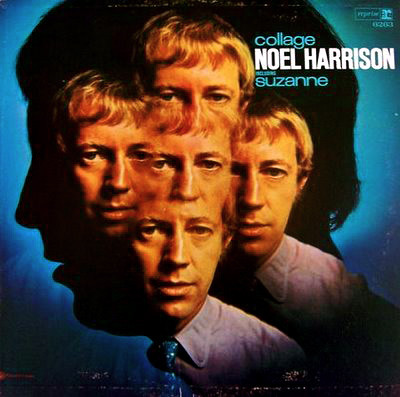
Noel Harrison - "Collage" Vinyl, LP, Album, 1967 (Reprise Records)


Noel Harrison is known for his role in "The Girl From U.N.C.L.E., as well as being the son of Rex.  But he also made a series of albums, and had a huge hit with Michel Legrand's "The Windmills of Your Mind."   And he had been making recordings since the late 1950s.  A recording artist of good taste and his very last album was a recording of Jacques Brel songs - which makes perfect sense with what one thinks of Harrison's music career.  "Collage" is the ultimate 1967 folk/pop album from Harrison.  It's interesting to note that the songwriter/singer was in full bloom at this time, but Harrison is mostly a singer who covered songs.  But his taste was exquisite, and this is one of my favorite albums from that period of time.  Mostly due to his liking, but also he had that British/French attitude towards the craftsmanship of a good song, and '67 produced a lot of great music in that category.   

He covers Dylan's "Just Like A Woman" but also "Suzanne" by Leonard Cohen.  He also had the wisdom to do "Museum" by Donovan, which is a fantastic underappreciated piece of work.   A Bob Lind song (another underrated figure) and a great version of "A Whiter Shade of Pale" by Procol Harum.   And of course, it ends with "Strawberry Fields Forever."   The beauty of the album is how Harrison approaches the material.  It doesn't feel like he's just singing the hits of the day, but for sure he had an individual and real connection to these songs. 

Wednesday, September 21, 2016

John Lennon - Plastic Ono Band (Apple)


This sounds odd to read now, but I was 16 years old when this album came out. It was a Christmas gift from my parents.  It was clearly the end.  I pretty much grew up with The Beatles from one album to the other - then they broke up.  Which doesn't sound like a big deal in the 21st century, but I was depressed and at lost when I learned or read about the breakup of The Beatles.  When Paul announced that he was leaving it was in a sense like a divorce of one's parents.  It was quite painful.  What made the pain more realistic was John Lennon's first solo album "Plastic One Band." Minimal.  To the point. And it took no prisoners. And that's the horrible beauty of this album.

It wasn't intellectual, or profound sounding - it was John Lennon in December 1970.  Not only that, but it was the last album from a Beatle - even an ex-Beatle.  At least to me.  When I heard that album in 1970, it was the end.  Not only in Lennon's statement, but also the brutal sound of the album. It was not only the end of an era, but even more important, the end of John Lennon.

Yes, he had or made other albums, and yes, they were hits.  But "Plastic Ono Band" was the last Lennon album of great importance, and therefore the last great Beatle album.   There is not even a reason for Lennon to record another album.  That is how I felt when I heard this album, and I still feel that way when I hear it now. "Imagine" has it points, but a work of art, it's nothing compared to this album. Lennon was on a roll in the late 60s.  He really didn't write or perform a bad song- in fact they were all brilliant.  "Instant Karma" and "Cold Turkey" were fantastic 45 rpm singles.

The beauty of this album is that it was and is, total destruction.   The minimal Phil Spector/Lennon production is perfect.  Minimalism fits the Lennon aesthetic as it was the perfect crime weapon of the last eight years of Beatle era.  Because this album was a goodbye to that, and clearly it is about the end.  And in a sense it is the end, because Lennon never made another masterpiece. The moment, the time, and he and Yoko and Phil - it was the perfect storm.  Oddly enough, Spector also recorded the Harrison "All Things Must Pass" album, and that, although it had great moments, is really nothing compared to the Lennon album.   Spector's piano work on "Love" is superb.  Even that has a time-frame that this won't last forever.  "Plastic One Band" closed the Lennon world.  He became a public figure, but as an artist he never again reached this peak.  "Plastic One Band" like Bowie's "Blackstar" is his ultimate goodbye album.  As No. 6 would say "I'll be seeing you."


Saturday, November 30, 2013

The Beatles - "Free As A Bird" 45 rpm vinyl single


The Beatles - Free As A Bird
Vinyl 7” 45 rpm, U.S. 1995
Apple Records


Doctor Frankenstein  made this album.  John Lennon recorded this demo in 1977, and the Fab Three did overdubs, etc in 1995.  Morbid?  The weird thing for me is to pretend that somehow someone can come back from the dead to make a new recording.   Death is final.  But not in the pop music world.   But beyond that it’s a nice Beatle record.  The additional Paul like chorus or bridge is pure magic in conjunction with this being a Beatle record. Nevertheless it is a depressing record on many accounts.  The B-side is quite interesting.  The Beatles through out most of the 60’s made Christmas greetings on record for their fan club, and this one I believe was done in 1967, has a slight psych touch to it. 

The Beatles - "Baby It's You" Vinyl 7" EP


The Beatles - Baby It’s You
Vinyl 7” EP, 45 RPM, Mono, U.S., 1995
Apple Records

The fab four on BBC radio.  Four songs on this EP, each track features all four Beatles’s lead vocals. The key track here is their version of the Bacharach & David classic with a great Lennon vocal.  Overall this EP covers the Beatles love for the American girl group sounds.  Besides the title cut they also cover “Devil In Her Heart” (George sings it), and Ringo’s “Boys.”  Paul being the spoil sport does his “I’ll Follow The Sun.” 


The EP is a nice snapshot of a time, and one wonders if they knew, at the time of these recordings,  that they could never go back there again.  When I hear early Beatles material, I think of it as a time capsule, and it doesn’t place me in that time frame or point in history, but I feel that they were living for the moment, and they truly didn’t know what will happen around the corner.